Cut & Polish In Clyde
Cut & Polish Experts
Fully self-contained mobile detailing across Melbourne's south-east. We bring our own water and power to your driveway, and you get a fixed price before we start.
A cut and polish machines a very thin layer off the clear coat to remove the defects sitting inside it, which is why it can eliminate swirl marks, wash marring, oxidation and light scratches that no amount of washing will touch. Your Local Mobile Car Detailing does this work at your address, starting with a decontamination wash and clay bar so no grit is dragged across the paint during machining. We use a dual-action polisher with the least aggressive combination of pad and compound that will actually do the job, because clear coat is a finite resource and there is only so much of it. You get an honest assessment first, including what will come out, what will not, and where we are not prepared to cut further. A protective sealant goes on afterwards. Call 0413 242 485.
GET A FREE QUOTE
Your Local Mobile Car Detailing
Single-Stage, Two-Stage, And Knowing Which Yours Needs
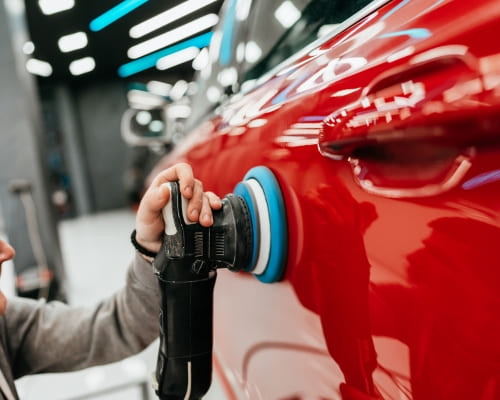
Correction work is graded by how many machine passes the paint actually requires, and paying for more than you need is wasted money on a finite resource. A single-stage polish uses one pad and compound combination to remove light defects and restore gloss, and it suits most daily drivers where the problem is general dullness, light wash marring and a few months of neglect. Two-stage correction adds a dedicated cutting pass before the refining pass, and it is what heavily swirled paint needs, typically a dark-coloured car that has been through automatic washes for years. Beyond that there is multi-stage work on badly neglected or oxidised paint, which is genuinely time-consuming and priced accordingly. There is also spot correction, where a single panel has been marked, kerbed or scuffed and the rest of the car is fine, and it is often the sensible answer rather than doing the whole vehicle. We assess the paint in daylight before quoting and tell you which level it actually needs, and it is very common for us to recommend the cheaper option.
Your Local Mobile Car Detailing
How The Work Is Done, And Why Preparation Is Most Of It
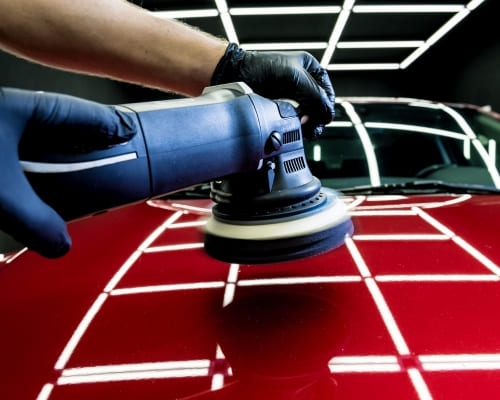
Machining paint that has not been properly prepared is the fastest way to put new scratches into it, so the majority of the job happens before the polisher is switched on. The car is washed with a foam pre-soak and the two-bucket method, then checked by touch, and anywhere the paint feels gritty gets an iron fallout remover to dissolve bonded brake dust followed by a clay bar to shear off anything remaining. Skipping this means dragging embedded particles across the panel under a spinning pad, which creates exactly the defects we are being paid to remove. The paint is then assessed under proper lighting to identify the defect types and depths, and on unfamiliar paint we work a test section first to confirm the least aggressive combination that achieves the result. Machining is done with a dual-action polisher panel by panel in overlapping passes, with the pad cleaned regularly because a loaded pad stops cutting and starts marring. Each panel is wiped down with a panel wipe to remove polishing oils, which is the honest step that reveals the true result rather than a temporarily filled one. A protective sealant goes on last, because bare corrected paint is unprotected paint.
Your Local Mobile Car Detailing
Why Honesty Is The Differentiator On This Service
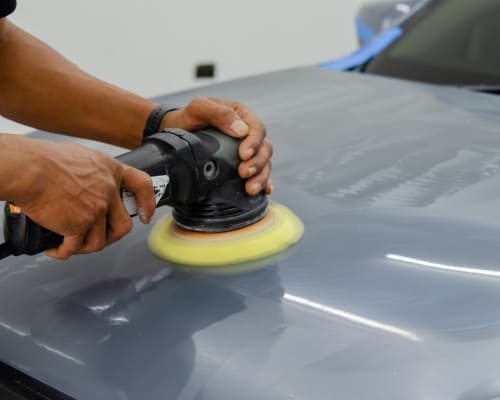
Every detailer in the south-east lists cut and polish, and almost none of them explain that the process removes clear coat. We say it plainly because it changes how you should think about the service. It means we use the least aggressive approach that works rather than the most aggressive one available, that we will decline to keep cutting a very deep scratch when continuing risks going through the clear coat, and that we would rather leave a defect slightly visible than damage the panel permanently. It also means we do the panel wipe stage, which removes the polishing oils that can temporarily hide swirls, so what you inspect at the end is the real result rather than something that looks perfect until the third wash. Before starting we walk the car with you and point out specifically what will come out, what will improve but not disappear, and what will not change at all. And because we work at your address rather than a workshop, you can look at the paint in natural daylight with us, which is far more revealing than a showroom light.
Your Local Mobile Car Detailing
What A Cut And Polish Costs In Melbourne's South-East
A single-stage machine polish across a full car generally runs $169 to $400, depending on the size of the vehicle and how much correction the paint needs. Two-stage correction typically runs $450 to $900 and can go higher on large vehicles, hard paint or badly neglected finishes. Spot correction on a single panel is usually $80 to $180 and is often the right answer when only one area is marked. Paint decontamination with a clay bar is included in our correction pricing rather than added afterwards, because polishing without it is not a service worth selling. Vehicle badge does not drive the price, but paint hardness does, since some manufacturers use notably harder clear coats that take considerably longer to correct. Applying a protective sealant after correction is included, because leaving freshly corrected paint bare wastes the work. Call 0413 242 485 with the make, model, colour and a description of what you can see in the paint.
Your Local Mobile Car Detailing
Cut And Polish, Machine Polish, Full Correction Or Touch-Up
A machine polish is the light end: one refining pass to restore gloss and remove very light marring, ideal on a well-maintained car before applying protection. A cut and polish adds genuine abrasive cutting and is the standard answer for a daily driver with visible swirls. Full multi-stage paint correction is the top end and is aimed at getting as close to defect-free as the remaining clear coat safely allows, which makes sense on a car being kept long-term or prepared for sale at a high price point. Touch-up paint is a completely different tool and is what you need when a stone chip or scratch has gone through the clear coat into the colour, since polishing cannot fill anything, only level around it. For anything deeper still, such as a dent or a scrape through to primer, the honest answer is a panel shop rather than a detailer, and we will tell you that instead of taking the booking. Most cars we see need a single-stage polish and a sealant, and that is what we will recommend if that is what the paint calls for.
Related Concreting Services
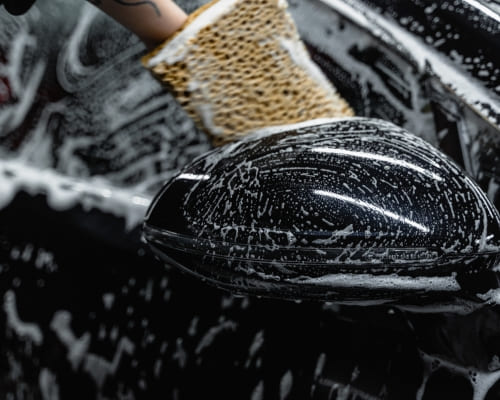
A proper hand wash at your place, not a spinning brush that puts swirl marks into your clear coat. Two-bucket method, pH-neutral foam and a spot-free dry, done while you get on with your day.
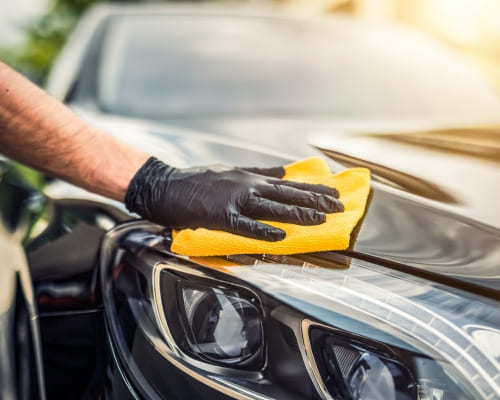
A full detail without leaving your driveway. We arrive fully self-contained with our own water and power, quote a fixed price before a drop touches your paint, and hand the car back cleaner than the day you bought it.
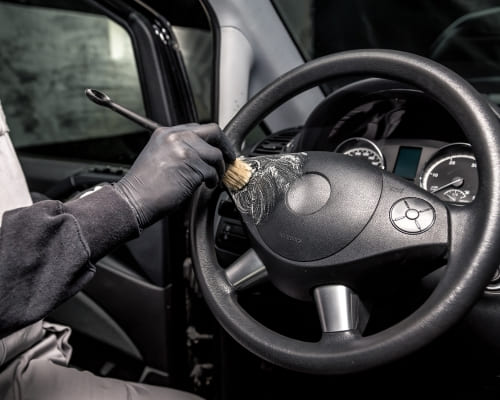
Sand, mud and spilt-drink stains lifted out of the pile rather than pushed further in. Hot water extraction pulls the dirt and the water back out, so nothing is left damp in the underlay to go musty later.
TESTIMONIALS
What Our Cut & Polish Customers Say About Us
The Process
3 Step Process For Your Cut & Polish Needs

Book In
Tell us your car, your suburb and what needs doing. You get a fixed price and a firm arrival window up front.

We Arrive
We turn up fully self-contained with our own water and power, walk the car with you, then get straight into it.

Handed Back
We finish with a walkaround so you can check every panel. Spot something in the next 24 hours and we come back.
Cut & Polish In Clyde
FREQUENTLY ASKED QUESTIONS
Everything you need to know about our Cut & Polish In Clyde
What does it mean to cut and polish?
Cutting means using an abrasive compound with a machine polisher to remove a very thin, controlled layer from the top of the clear coat, taking the defects with it. Polishing is the refining stage that follows, using a finer abrasive and a softer pad to remove the fine haze the cutting stage leaves behind and restore full gloss. The reason it works is that most paint defects, including swirl marks, wash marring and light scratches, are indentations in the clear coat rather than anything sitting on top of it, so the only way to remove them is to level the surrounding surface down to the base of the defect. That is also why it cannot be repeated indefinitely, because each cut uses up clear coat that does not grow back.
Is cut and polish good for cars?
Done properly and not too often, yes, and it is the only way to genuinely restore paint that has been swirled or has oxidised. But it should be understood for what it is, which is a controlled removal of clear coat rather than a coating being added. A factory clear coat is typically somewhere between 40 and 60 microns, and a single-stage polish removes a few microns while an aggressive multi-stage correction removes considerably more. That is fine once, or a handful of times over a car's life, and it is a genuine problem if someone cuts a car every year. It is also why protecting the finish afterwards matters, since a sealant preserves the result and reduces how often correction is needed again.
How much should a cut and polish cost?
A single-stage machine polish across a whole car generally runs $169 to $400 depending on size and condition. Two-stage correction, meaning a proper cutting pass followed by a refining pass, typically runs $450 to $900 and higher on large vehicles or hard paint. If you are quoted well under $150 for a full cut and polish, it is almost certainly a glaze or a filler product being applied by hand or machine, which hides the swirls with oils for a few weeks and then lets them reappear after two or three washes. Ask specifically whether the price includes decontamination and a clay bar, because polishing over bonded contamination drags it across the paint and creates new defects.
How long does it take to cut and polish a car?
A single-stage polish on a mid-size car takes around four to six hours including the decontamination wash that has to come first. A two-stage correction usually runs eight to twelve hours and is often spread over two visits on a larger vehicle. The variables are panel count, paint hardness, which varies significantly between manufacturers, and how deep the defects are. Anyone offering a full cut and polish in ninety minutes is applying a filler product rather than correcting anything, and the difference will be obvious after the second wash. We give you a realistic duration with the quote so you can plan for the car being unavailable.
Will it remove scratches, or just swirls?
It removes anything that sits within the clear coat, which covers swirl marks, wash marring, buffer trails, light scratches, water spot etching and oxidation. It does not remove anything that has gone through the clear coat into the colour coat or the primer beneath. There is a simple test you can do yourself: run a fingernail lightly across the scratch, and if the nail catches in it, the defect is too deep to polish out safely, though it can usually be made significantly less visible. If it does not catch, there is a good chance it will come out entirely. Bird lime etching and tree sap damage often polish out well if they are caught within a few months, which is a common issue on the tree-lined streets around Berwick.
How often can a car be cut and polished safely?
There is no fixed number, because it depends on how much clear coat the car started with and how aggressive each correction was. As a rough guide, a full correction every three to five years is reasonable for a car that is otherwise looked after, and a light single-stage polish can be done more often than that. What causes real trouble is annual aggressive cutting, particularly on a car that has already been corrected before it was bought, since you have no way of knowing what was taken off previously. This is why we default to the least aggressive pad and compound combination that will do the job, and why we would rather leave a very deep scratch slightly visible than keep cutting until we go through the clear coat.
Request A Free Cut & Polish Quote
GET A FREE QUOTE
BUSINESS
SERVICES
SERVICE AREAS
OPERATING HOURS
Sun: 7:00am - 9:00pm
Mon: 7:00am - 9:00pm
Tue: 7:00am - 9:00pm
Wed: 7:00am - 9:00pm
Thu: 7:00am - 9:00pm
Fri: 7:00am - 9:00pm
Sat: 7:00am - 9:00pm