Paint Protection In Clyde
Paint Protection Experts
Fully self-contained mobile detailing across Melbourne's south-east. We bring our own water and power to your driveway, and you get a fixed price before we start.
Paint protection puts a sacrificial layer between your clear coat and everything that attacks it, including UV, bird lime, tree sap, brake dust and road film. Your Local Mobile Car Detailing applies a synthetic sealant that typically lasts around six months, and the result depends almost entirely on what happens before it goes on. We wash, decontaminate with an iron fallout remover and clay bar, and where needed polish the paint first, because applying protection over bonded contamination simply seals the contamination against the panel. The finish beads water, releases dirt more easily and stays cleaner between washes. To be clear about what this is: it is a six-month protective sealant, not a multi-year ceramic coating and not paint protection film, and we will explain the difference honestly. Call 0413 242 485.
GET A FREE QUOTE
Your Local Mobile Car Detailing
Wax, Sealant And Coating, And Where Ours Sits
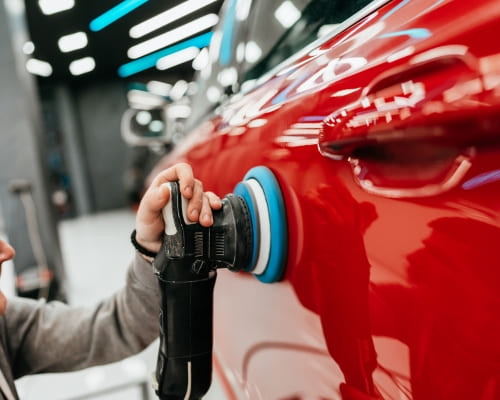
Protection products form a ladder, and understanding where each rung sits stops you from overpaying or being misled. Carnauba wax is a natural product that delivers a warm, deep gloss and is genuinely lovely on a show car, but it is soft, breaks down in heat and typically lasts a few weeks in Melbourne summer. Synthetic sealants are the practical middle rung and are what we apply, using polymer chemistry that bonds more tenaciously to clear coat and resists UV, detergent and acidic contamination for around six months. Ceramic coatings use silica chemistry to form a much harder semi-permanent layer measured in years rather than months, and they are a specialist installation. Paint protection film is a physical urethane layer applied to panels and is the only option that resists stone chips. We offer the sealant tier and we say so plainly, because the most common complaint about this trade is operators using the word ceramic loosely to justify a price. If a multi-year coating is what your car needs, we will point you to a specialist rather than sell you something else with a similar name.
Your Local Mobile Car Detailing
Preparation Is The Job, Application Is The Easy Part
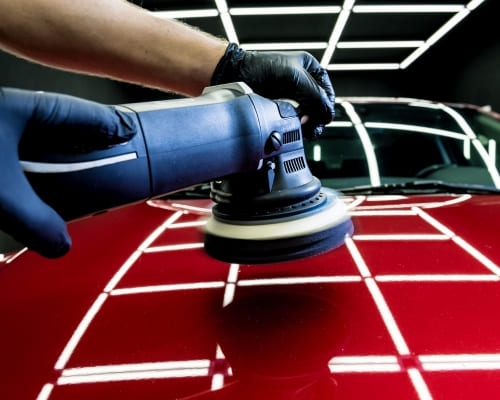
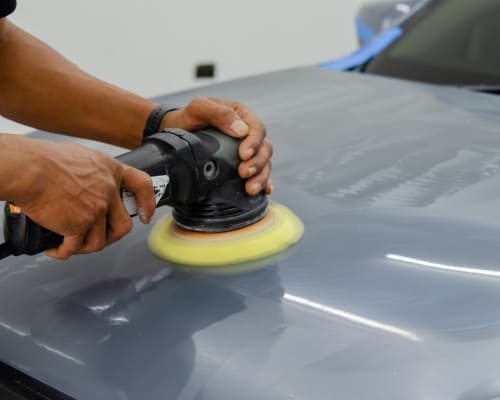
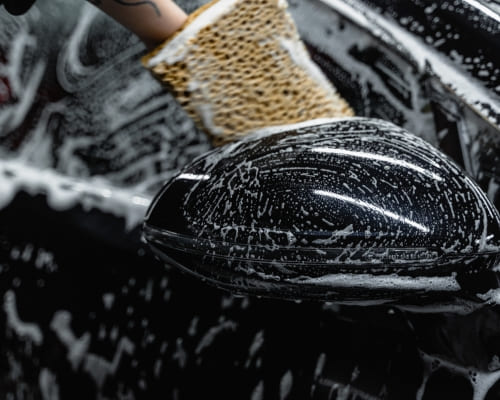
Protection is only as good as the surface it bonds to, which is why the great majority of a protection booking is spent preparing rather than applying. The car is washed with a foam pre-soak and a two-bucket contact wash, then checked by hand, and paint that feels rough is holding bonded contamination that washing cannot shift. An iron fallout remover dissolves the embedded brake dust and industrial particles, which is particularly relevant around Dandenong where airborne industrial fallout is a genuine factor, and a clay bar then shears off whatever remains. If the paint is dull or swirled, we discuss polishing before protection, because sealing over defects preserves them in place for six months. The panels are then wiped with a panel wipe to strip any residual polishing oils, since sealant applied over oil bonds to the oil rather than to the clear coat and fails early. Only then does the sealant go on, applied panel by panel in a thin, even layer, allowed to flash, and levelled with clean microfibre. It needs a period to cure before the car is exposed to water, and we will tell you exactly how long to wait.
Your Local Mobile Car Detailing
What This Actually Prevents Around Here
Protection is easiest to justify when you look at the specific things that damage paint in the suburbs we cover. Around Berwick, mature street trees mean sap and bird lime landing on cars daily, and both are acidic enough to etch clear coat within days in summer sun. Around Frankston, onshore wind off Port Phillip Bay carries a fine salt film that settles on paint and into door shuts, holds moisture against the metal and accelerates corrosion on older vehicles. Around Dandenong, thousands of industrial businesses mean airborne fallout that bonds to paint and makes it feel gritty. Across Clyde and Clyde North, the newer estates have almost no established tree canopy, so cars sit in full sun and the dominant issue is UV, which oxidises clear coat and fades colour over years. A sealant addresses all four by giving the contaminant something sacrificial to attack, and by making the surface slick enough that a lot of it never bonds in the first place. It is not a force field, and anything left sitting long enough will still cause damage, but it converts a permanent problem into a wash-it-off problem.
Your Local Mobile Car Detailing
What Paint Protection Costs
A prepared and sealed application generally runs $150 to $450, driven by vehicle size and by how much preparation the paint requires. A regularly maintained small car needing a wash, light decontamination and a sealant sits at the lower end. A large SUV that needs full iron fallout treatment and a clay bar before sealing sits at the upper end. Where the paint genuinely needs correcting first, that is quoted as cut and polish work on top, and the combined job typically lands between $400 and $800, which is still substantially below the $750 to $1,500 and upward that multi-year ceramic coatings command. Reapplication at around the six-month mark is cheaper than the first application, because the paint is already decontaminated and only needs a maintenance wash before resealing. We will always tell you when your existing protection is still working and you do not need us yet. Call 0413 242 485 with your vehicle details and a description of the paint condition.
Your Local Mobile Car Detailing
Sealant Against Wax, Ceramic And Film
If you want maximum gloss for a specific occasion and do not mind reapplying, a carnauba wax is genuinely the prettiest finish and the cheapest to buy. If you want practical durability on a daily driver with sensible effort, a synthetic sealant is the balanced answer and it is what most cars in our service area should be running. If you are keeping a car long-term, park it outside, and want to stop thinking about protection for several years, a professionally installed ceramic coating is worth the money, though it demands proper paint correction beforehand and careful maintenance afterwards, and it must be installed by someone who specialises in it. If your concern is stone chips rather than chemical attack, particularly on a car doing high freeway kilometres from Pakenham or Cranbourne, no coating of any kind will help and paint protection film on the front bar and bonnet is the only real answer. We offer the sealant tier and we are content to tell you when one of the others suits you better.
Related Concreting Services
Inside and out, top to bottom, in one visit at your own driveway. Decontaminated and protected paint, extracted carpets and seats, and cleaned door jambs, vents and seat rails, which are the areas most detailers quietly skip.
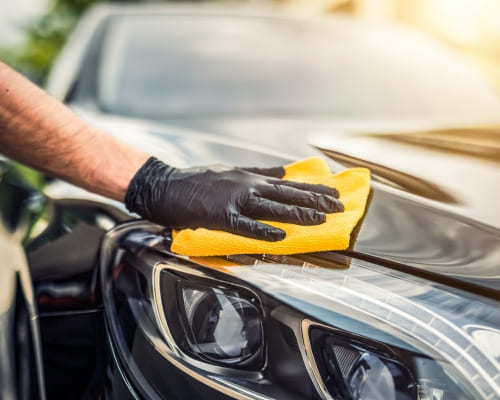
A clean bay done the careful way, with covers over the alternator, fuse box and intake, low pressure only, and a dry-down before anything is started. It also makes any real oil or coolant leak immediately obvious.
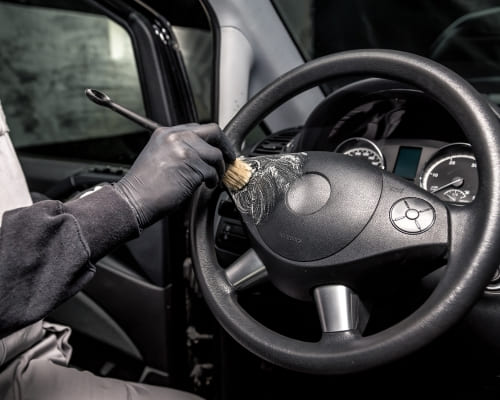
A full detail without leaving your driveway. We arrive fully self-contained with our own water and power, quote a fixed price before a drop touches your paint, and hand the car back cleaner than the day you bought it.
TESTIMONIALS
What Our Paint Protection Customers Say About Us
The Process
3 Step Process For Your Paint Protection Needs

Book In
Tell us your car, your suburb and what needs doing. You get a fixed price and a firm arrival window up front.

We Arrive
We turn up fully self-contained with our own water and power, walk the car with you, then get straight into it.

Handed Back
We finish with a walkaround so you can check every panel. Spot something in the next 24 hours and we come back.
Paint Protection In Clyde
FREQUENTLY ASKED QUESTIONS
Everything you need to know about our Paint Protection In Clyde
Is it worth it to get paint protection?
For a car that lives outside, generally yes, and the argument is about prevention rather than appearance. The damage that permanently costs you money is etching, where bird lime, tree sap or industrial fallout sits on paint in the sun and chemically bites into the clear coat, and once it has etched the only fix is machining the paint. A sealant gives those contaminants a layer to attack instead, and buys you the time to wash them off before they reach the clear coat. It also makes routine washing safer, because dirt releases more easily and less physical contact is needed. For a garaged car driven rarely, the case is much weaker, and we will say so.
Is paint protection worth it on a used car?
Often more so than on a new one, because a used car has already accumulated contamination and light defects, so the preparation stage delivers a visible improvement before the protection even goes on. What matters is being realistic about what you are buying: on a used car, protection preserves the condition it is in today, it does not restore it. If the paint is swirled or oxidised, sealing over that locks in the dull appearance for six months, so the sensible sequence is to correct first and then protect. We will tell you if that applies to your car and quote both, rather than sealing over problems and letting you discover them later.
How much does paint protection cost for a car?
A prepared and sealed application generally runs $150 to $450 depending on the size of the vehicle and how much preparation the paint needs. The lower end covers a small, well-maintained car where a wash and light decontamination is enough before sealing. The upper end covers larger vehicles and paint that needs a full decontamination and a polish first. Where a car genuinely needs correction beforehand, that is quoted as cut and polish work in addition, and the two together typically land between $400 and $800. Multi-year ceramic coatings sit well above this, commonly $750 to $1,500 and beyond, which is a different product and one we do not offer.
What is the best way to protect your paint?
In order of durability, the options are wax, synthetic sealant, ceramic coating and paint protection film. Carnauba wax gives excellent depth of shine but lasts weeks rather than months. A synthetic sealant, which is what we apply, is more chemically resistant and typically lasts around six months. A professionally applied ceramic coating uses silica chemistry to bond semi-permanently to the clear coat and can last several years, at several times the price. Paint protection film is a physical urethane layer that also resists stone chips, and it is the only option that provides genuine impact protection. The honest answer for most daily drivers parked outside is a sealant maintained properly, because a neglected ceramic coating outperforms nothing.
Is this the same as ceramic coating?
No, and it is worth being clear rather than blurring the terms the way a lot of the industry does. What we apply is a synthetic paint sealant with roughly six months of durability. A true ceramic coating is a silica-based product that cures into a semi-permanent layer on the clear coat and lasts years, and it needs a controlled environment, extensive paint correction first and a considerably higher price. We do not offer ceramic coating or paint protection film, and rather than sell you something adjacent and call it ceramic, we will tell you plainly that if a multi-year coating is what you want, you need a specialist installer. What we do offer is honest six-month protection over properly prepared paint.
How do I look after it so it lasts the full six months?
Wash it regularly with a pH-neutral shampoo and the two-bucket method, and avoid automatic car washes entirely, because brush systems will abrade the sealant off within weeks and put swirls in the paint underneath. Do not use harsh degreasers or high-alkaline traffic film removers on the bodywork, since those are designed to strip protection. Remove bird lime and tree sap promptly rather than leaving them to bake, because the sealant buys you time but not immunity. Avoid washing in direct sun where water dries on the panel and leaves mineral spotting. Done sensibly, the water beading tells you when protection is fading, and when it stops beading it is time to reapply.
Request A Free Paint Protection Quote
GET A FREE QUOTE
BUSINESS
SERVICES
SERVICE AREAS
OPERATING HOURS
Sun: 7:00am - 9:00pm
Mon: 7:00am - 9:00pm
Tue: 7:00am - 9:00pm
Wed: 7:00am - 9:00pm
Thu: 7:00am - 9:00pm
Fri: 7:00am - 9:00pm
Sat: 7:00am - 9:00pm