Car Carpet Cleaning In Clyde
Car Carpet Cleaning Experts
Fully self-contained mobile detailing across Melbourne's south-east. We bring our own water and power to your driveway, and you get a fixed price before we start.
Car carpet cleaning deals with everything that has worked its way down into the pile, which is where a vacuum stops being useful. Your Local Mobile Car Detailing pre-sprays the carpet, gives the cleaner time to break down the soiling, agitates it, then uses hot water extraction to pull both the dirt and the water back out under vacuum. That last part matters, because the common failure in carpet cleaning is leaving moisture in the underlay, which is exactly how a car ends up smelling musty a week later. We cover the whole floor, both front and rear, the mats, the boot well and the spare wheel area. Ground-in sand, dried mud, spilt drinks and pet accidents all get treated according to what they actually are. Everything is dried before we pack up. Call 0413 242 485.
GET A FREE QUOTE
Your Local Mobile Car Detailing
The Four Things That Ruin Car Carpet, And How Each Is Treated
Carpet problems fall into distinct categories and they are not interchangeable, which is why a single generic clean often disappoints. Ground-in grit and sand is mechanical damage: the grains sit at the base of the pile, abrade the fibre every time someone puts a foot down, and have to be agitated loose before any vacuum will lift them. Spills are chemical, and the treatment depends entirely on what was spilled, since a sugary soft drink responds to a straightforward pre-spray and extraction while milk or vomit needs an enzyme because the residue is feeding bacteria. Dried mud and clay, which we see constantly on vehicles coming off the unsealed edges around Pakenham and the construction streets in Clyde, needs to be fully dried and broken up mechanically before moisture goes anywhere near it. Water ingress is the fourth and the most serious, where a blocked sunroof drain or a failed door seal has been quietly wetting the underlay, and no amount of surface cleaning fixes that until the leak is dealt with. We work out which of these you have before quoting, because they carry very different amounts of work.
Your Local Mobile Car Detailing
Why Extraction Beats Every Other Method On Carpet
Car carpet is not the same as house carpet, because underneath it sits a layer of underlay and sound-deadening material that acts like a sponge and has no practical way to dry once it is wet. That single fact dictates the method. Anything that saturates the carpet, including shampooing, mopping or a domestic wet vacuum with weak suction, pushes water down into that layer where it stays for weeks in a cool climate, and that is where the musty smell in a freshly cleaned car comes from. Hot water extraction works the other way: it delivers a controlled volume of heated solution directly into the pile and immediately recovers it under strong vacuum, so the great majority of what goes in comes straight back out along with the suspended dirt. The pre-spray and dwell stage before it does most of the chemical work, so the extraction is removing already-loosened soiling rather than trying to blast it free. On heavily soiled carpet we do two lighter passes rather than one heavy one, and we dry with airflow between them. Mats come out and are done separately, because cleaning them in situ means the carpet underneath never gets touched.
Your Local Mobile Car Detailing
What We Do About Sand, Mud And The Local Ground
The suburbs we cover produce three quite different carpet problems and we handle them differently. Around Cranbourne and Botanic Ridge the ground is sandy heathland soil, and that fine sand works to the bottom of the pile where it needs repeated mechanical agitation before extraction can achieve anything. Around Clyde and Clyde North the issue is construction: fresh topsoil, clay and cement dust walked in from unfinished landscaping and neighbouring building sites, which turns to a hard film in carpet and needs to be dried and broken up rather than wetted. Out at Pakenham the gravel and unsealed rural roads bring in a coarser mix of clay and road dust, usually in a ute footwell, along with whatever the work day involved. Frankston brings fine bay sand from the foreshore, which is the trickiest of the lot because the grain is small enough to defeat suction. We adjust the number of dry passes and the moisture level accordingly, rather than running the same routine on every car and hoping.
Your Local Mobile Car Detailing
What Car Carpet Cleaning Costs Around The South-East
A full carpet extraction across the front, rear, mats and boot generally runs $120 to $250. A mid-size sedan in ordinary condition sits at the lower end, while a seven-seater with a third row, a heavily used boot and months of sand sits at the top. A single spot treatment on one spill is usually $50 to $90 and is worth booking early, because a fresh stain is a fraction of the work of one that has had six months to set and oxidise. If the carpets are being done as part of a full interior detail at $220 to $350, they are already included and there is no separate charge. The costs that push higher are heavy dried mud, which requires multiple dry passes before extraction, and any situation where water has reached the underlay and it needs to be lifted and dried separately, which we quote after seeing it. Call 0413 242 485 and describe the state of the floor honestly.
Your Local Mobile Car Detailing
Vacuum, Shampoo Or Hot Water Extraction
Vacuuming alone is maintenance, and if you do it weekly with a decent machine it genuinely prevents most of the damage that grit causes over time. It will not, however, remove soiling that has bonded to the fibre, which is why carpet slowly goes grey no matter how often it is vacuumed. Shampooing is where most home efforts go wrong: it introduces detergent and water with no reliable way to recover either, so residue stays behind and attracts dirt faster than before, and the moisture in the underlay is the direct cause of the mildew smell that appears a week later. Hire-shop carpet machines are a step up because they do extract, though they are designed for house carpet and are awkward to use effectively in a footwell. Hot water extraction with proper heat and suction is the version that both cleans and dries, and it is the reason a professional result lasts rather than looking good for a fortnight. If your carpet is merely dusty, save your money and vacuum it. If it has gone grey, been rained on, or had something spilled in it, extraction is the only method that will change anything.
Related Concreting Services
Yellowed, hazy lenses sanded back and resealed with fresh UV protection, so they stay clear instead of going cloudy again in three months. Done in your own driveway in about an hour for a standard pair.
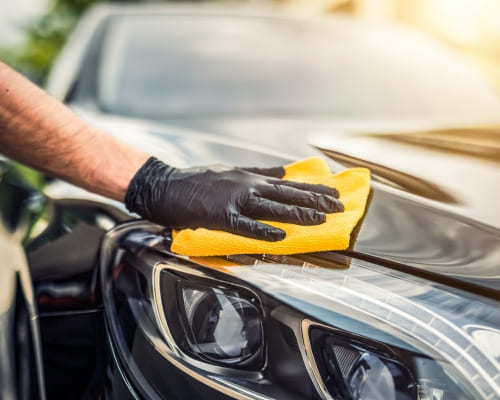
A prepared, sealed finish that shrugs off bird lime, sap and UV for around six months. We prep the paint properly first, because protection applied over contamination just locks the dirt in against your clear coat.
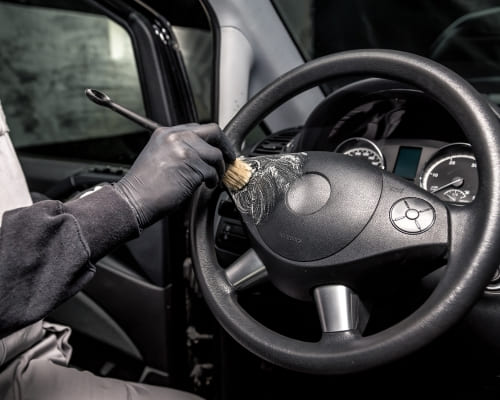
Sand, mud and spilt-drink stains lifted out of the pile rather than pushed further in. Hot water extraction pulls the dirt and the water back out, so nothing is left damp in the underlay to go musty later.
TESTIMONIALS
What Our Car Carpet Cleaning Customers Say About Us
The Process
3 Step Process For Your Car Carpet Cleaning Needs

Book In
Tell us your car, your suburb and what needs doing. You get a fixed price and a firm arrival window up front.

We Arrive
We turn up fully self-contained with our own water and power, walk the car with you, then get straight into it.

Handed Back
We finish with a walkaround so you can check every panel. Spot something in the next 24 hours and we come back.
Car Carpet Cleaning In Clyde
FREQUENTLY ASKED QUESTIONS
Everything you need to know about our Car Carpet Cleaning In Clyde
How do car detailers get the carpet so clean?
The difference is extraction and pre-treatment rather than any secret product. A domestic vacuum only removes what is loose on the surface, while carpet that looks permanently grey is usually holding fine grit deep in the pile and soiling bonded to the fibre. The professional sequence is to vacuum thoroughly first, apply a pre-spray and let it dwell so it breaks down the soiling chemically, agitate with a brush to lift it into suspension, then hot water extract, which injects clean solution and immediately draws it back out under strong vacuum along with the dirt. Heavy areas get two lighter passes rather than one saturating one. The reason home attempts fall short is almost never effort, it is that a domestic wet vacuum does not have the suction to recover the solution.
How to clean a stinky car carpet?
The smell almost always comes from something in the carpet rather than on it, so surface cleaning and air freshener will not solve it. Find the source first: a spilt drink that soaked through, a pet accident, damp that has come in through a blocked sunroof drain or a failed door seal, or a wet floor mat that was never dried. Protein-based sources such as milk, vomit or urine need an enzyme treatment, because the smell is produced by bacteria feeding on residue and cleaner alone leaves that residue in place. Damp-based smells need the water source fixed first, or it simply comes back. Then extract, then dry thoroughly with airflow. If the underlay has been saturated for a long time it sometimes has to be lifted and dried separately.
What is the best way to clean car carpet?
Take the mats out first and do them separately, because leaving them in means you clean them and the carpet underneath badly rather than either properly. Vacuum the carpet thoroughly and slowly, working the nozzle in different directions so the pile is lifted and grit is released rather than being flattened over. Pre-spray with an appropriate cleaner and give it several minutes to work, agitate with a brush, then extract. If you do not have extraction equipment, the honest advice is to use as little moisture as possible and blot rather than soak, because over-wetting is far more damaging than leaving the carpet slightly dirty. Finish by drying with airflow, and do not close the car up while anything is still damp.
How long until the carpets are dry enough to drive on?
Done properly, the carpet should feel only slightly damp when we finish and be dry within a few hours, and you can drive the car straight away. We manage that by controlling the amount of moisture introduced rather than by relying on the weather, and by drying with airflow as we go rather than at the end. In winter it takes longer, so on a cold, still Melbourne day we use less solution, work in stages, and allow extra drying time rather than rushing. What you should never accept is a car handed back with visibly wet carpet, because moisture sitting in underlay in a closed cabin is the direct cause of the mildew smell people associate with cheap interior cleaning.
Can you get beach sand out of the carpet properly?
Yes, and it is worth doing properly because sand is abrasive and does ongoing damage to the fibre while it stays in there. Fine bay sand of the kind that comes back from Frankston foreshore is harder to remove than coarse inland sand, because the grains are small enough to sit right down at the base of the pile where suction alone struggles to reach. The approach is mechanical first: agitate the pile with a stiff brush to release the grains, vacuum, then repeat, often several times, before any moisture is introduced. Wetting sandy carpet before the sand is out is a mistake, since damp sand clumps and binds to the fibre. Once the bulk is out, extraction removes the fine residue and the staining.
What does car carpet cleaning cost?
A full carpet extraction covering front, rear, mats and boot generally runs $120 to $250 depending on the size of the vehicle and how heavily soiled it is. Bundled into a full interior detail it is considerably better value, since the interior detail at $220 to $350 already includes the carpets. Heavy sand or dried mud sits at the top of the range because of the repeated mechanical work needed before extraction can start. A single spot treatment on one spill is usually $50 to $90. If the underlay has been saturated and needs lifting and drying separately, that is quoted after inspection. Call 0413 242 485 and describe what is in the carpet and how long it has been there.
Request A Free Car Carpet Cleaning Quote
GET A FREE QUOTE
BUSINESS
SERVICES
SERVICE AREAS
OPERATING HOURS
Sun: 7:00am - 9:00pm
Mon: 7:00am - 9:00pm
Tue: 7:00am - 9:00pm
Wed: 7:00am - 9:00pm
Thu: 7:00am - 9:00pm
Fri: 7:00am - 9:00pm
Sat: 7:00am - 9:00pm